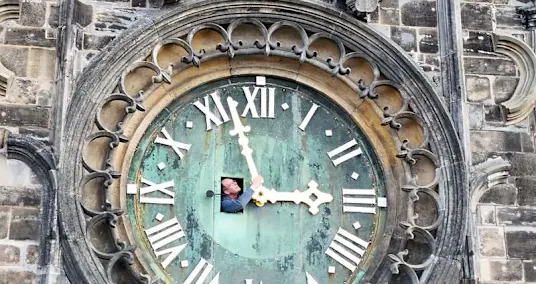
Clocks across the majority of European countries are set to go forward by one hour early on Sunday as the continent moves to daylight saving time, also known as summer time.
Clocks in most European nations including Germany advance by one hour at 2 am (0100 GMT) to 3 am, heralding longer evenings and brighter days.
This means that for the coming months parts of Europe will be on Central European Summer Time (CEST), before moving back to Central European Time (CET) in the autumn, when clocks go back again by an hour on October 25.
The aim of the change is to make better use of daylight in the shorter days of the winter in the northern hemisphere.
The signal for the automatic changeover of the clocks in Germany comes from the Federal Institute of Physics and Metrology (PTB) in the northern city of Braunschweig, also known as Brunswick in English.
The institute's experts ensure that radio-controlled clocks, station clocks and many industrial clocks are supplied with the signal via a long-wave transmitter called DCF77 in Mainflingen near Frankfurt.
latest_posts
- 1
 How Would You Like to Deal with Your Funds?
 - 2Gaza humanitarian efforts reach key milestone as UNICEF vaccinates some 13,000 children
- 3At UN climate conference, some activists and scientists want more talk on reforming agriculture
- 4Flourishing in Retirement: Individual Accounts of Post-Profession Satisfaction
- 5Takeaways from AP’s report on potential impacts of Alaska’s proposed Ambler Access Road


- Von der Leyen: Paris meeting sends signal of unity for Ukraine
- Novo Nordisk slashes prices of popular weight loss and diabetes drugs
- 4 Creative Savvy Home Gadgets of 2024: Reforming Home Robotization and Security
- How to watch the 2025 Macy's Thanksgiving Day Parade for free
- Weight-loss pill approval set to accelerate food industry product overhauls
- Safeguarding Your Senior Protection Against Extortion and Tricks.
- Many European nations want Israel to cancel 19 new settlement plans
- Extraordinary Picks for Home Apparatuses: Making Life Simpler
- Toilet rats? Washington health officials warn of possible rodents in sewer systems after floods