When you buy through links on our articles, Future and its syndication partners may earn a commission.

TOP TELESCOPE PICK:

The Celestron NexStar 8SE is a great choice for exploring distant solar system objects and you can currently get it for $200 off during the Black Friday sales! Check out our Black Friday deals page for more!
Tune in on Sunday (Nov. 30) to see live telescopic views as the near-Earth asteroid (433) Eros appears to buzz the Andromeda Galaxy, courtesy of a livestream hosted by the Virtual Telescope Institute in partnership with the Asteroid Foundation.
Sunday's livestream is due to start at 3 p.m. EST (2000 GMT) and will feature expert commentary from Virtual Telescope Project founder Gianluca Masi alongside live views of Andromeda and Eros taken from the organization's wide-field robotic telescopes in Manciano, Italy — weather permitting, of course.
"Having such an important near-Earth asteroid just a couple of degrees away from the legendary Andromeda Galaxy (Messier 31) is a precious opportunity to share both the importance of these kind of minor planets and the beauty of our cosmic neighbor, the Messier 31 island-universe," Masi told Space.com in an email.
In 1898, Eros became the first near-Earth asteroid ever discovered and was later visited by NASA's NEAR (Near Earth Asteroid Rendezvous) Shoemaker spacecraft. Upon reaching the object, this probe first orbited around the 20-mile-wide (33-kilometer-wide) body then, on Feb. 12, 2001, performed the first asteroid landing in history.
Eros will be just 37 million miles (60 million kilometers) from Earth when it passes within two degrees of Andromeda's core on the night of Nov. 30, while the vast spiral galaxy itself will be positioned a staggering 2.5 million light-years from our solar system.

"Thanks to its large size, Eros will shine at around magnitude 10 for several weeks, making it easily observable even with a modest 60 mm telescope," Masi wrote in a separate email to Space.com.
Magnitude is the value used by astronomers to measure the brightness of an object in the night sky: The lower the value, the brighter the object.
Want to catch a glimpse of the wandering asteroid for yourself? Both Eros and Andromeda can be found high above the eastern horizon in the hours following sunset on Nov. 30. First locate the constellations Cassiopeia and Andromeda using a handy starfinding astronomy app. Next locate the uppermost three stars and use them to point the way to Andromeda, as shown in the finder chart above.
Be sure to check out our roundup of the best binoculars and telescopes for exploring the night sky in 2025.
latest_posts
- 1
 Figure out How to Introduce Sunlight powered chargers on Your Rooftop securely
 - 26 Methods for further developing Rest Quality
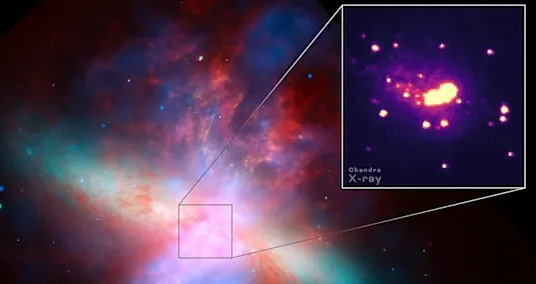
- 3This star-forming galaxy is blowing out powerful winds topping 2 million mph
- 4The Fate of Mechanical technology: 5 Headways Forming Tomorrow
- 5Big Bear glows with big stars | Space photo of the day for Dec. 31, 2025




- Iran-backed militias reassert power in Iraq, proving the Islamic axis is still standing
- The Best 10 Innovation Developments of the Year
- Cases of norovirus are on the rise just in time for the holiday season
- Parents who delay baby's first vaccines also likely to skip measles shots
- Brazil's Bolsonaro to continue his sentence at home because of poor health
- Which Switch Game Do You Suggest? Share Your Decision
- CDC studies show value of nationwide wastewater disease surveillance, as potential funding cut looms
- Merz: 80% of Syrians in Germany should return in three years
- Financial plan Cordial Home Redesigns That Add Worth