When we were growing up, gifts had weight to them. You circled things in a catalog and waited. You saved allowance in a piggy bank or plastic container on your dresser. If you wanted something big, you asked for it for your birthday or the holidays and then tried not to think about it for weeks. There was space between wanting and receiving. Sometimes you forgot about the thing entirely. Sometimes you wanted it even more.
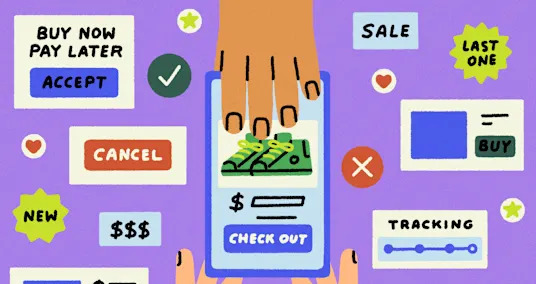
Parenting today looks different. Our kids live in a one-click world. Ads follow them from everywhere. On YouTube, they watch other kids get surprise deliveries on camera. And with a phone in our pocket, the gap between “I want that” and “It’s on the porch” can be minutes.
It creates a real tug-of-war inside of us as parents. We want to be generous. We love the look on our child’s face when they open something new. At the same time, there’s a nagging worry: Are we giving too much? Are we raising kids who expect instant gratification? Are we saying yes because we mean it, or because we’re tired? (Not to mention the deep, deeeeeeep underlying fear of them being too “spoiled,” a word deeply ingrained in most millennial parents’ psyche from our own childhoods.)
That tension inside of us makes sense. The environment we’re raising kids in is designed to spark desire and instant dopamine. Constant access changes the rhythm of childhood. When almost anything can arrive tomorrow, wanting starts to feel urgent.
The one-click problem
When everything is available all the time, meaning can get diluted. A small treat becomes an every-week occurrence. A special outing turns into a baseline expectation. Waiting, which used to be built into childhood, disappears.
Kids aren’t wrong for asking. Their brains are wired to seek novelty and reward. Add in algorithms that know exactly what colors, characters and trends will catch their attention, and it makes sense that requests feel relentless. “Can I have that?” becomes background noise in daily life.

It helps to remember that children’s brains aren’t fully formed; it’s impossible for them to have a fully developed sense of long-term planning or financial trade-offs. They live in the present, algorithm or not. When they see something appealing, their brain lights up. This existed long before the digital world, and has existed for every generation of children.
What changes in a one-click world is how often that spark gets reinforced. If every want is quickly met, the line between “this would be fun” and “I need this” gets blurry. The nervous system gets used to having an immediate reward. The pause that builds anticipation and appreciation gets shorter and shorter.
As parents, we’re navigating this in real time too. Convenience is seductive. Clicking “add to cart” can feel easier than holding a boundary with a disappointed child at the store. Sometimes it is easier — in the short term.
Reframing ‘no’ as love
Saying no can stir up guilt. Many of us grew up with money stress or strict rules around spending. We might have promised ourselves that our kids would have more freedom or more abundance. So when we hear “Can I get this?” and we say no, it can trigger old feelings.
Here’s what’s steady and true from a developmental perspective: Kids feel safer when the adults around them are calm and predictable. Clear limits help them understand how the world works. When parents respond consistently, children learn that boundaries are not random and not personal.

A no delivered with irritation lands differently than a no delivered with steadiness. The content is the same; the tone shapes the experience. When we can say, “I know you really want that. Today we’re not buying it,” without defensiveness or apology, we model something powerful. We show that desires can be acknowledged without being immediately fulfilled.
Limits around money and gifts also teach patience and tolerance of frustration. Here, you’re actively building resilience. A child who learns that wanting doesn’t always equal getting is practicing how to handle disappointment in manageable doses.
Scripts parents can use
When you’re in the moment, it helps to have language ready. Simple, calm phrases go a long way.
That looks really fun. We’re not buying it today.
I hear that you want it. You can add it to your wish list.
Right now we’re spending money on groceries. Toys aren’t in the plan for today.
It’s OK to feel disappointed. I’m here with you.
We can talk about that for your birthday.
You can save your allowance for it if it’s important to you.

Notice what’s not in those scripts. There’s no lecture about gratitude. No long explanation about budgets. No shaming. Just limits, and empathy.
If your child melts down, that’s developmentally normal. (Listen, I want a first-class, five-star resort trip to Italy. Sometimes, I have a tantrum in my own head about having to head to work instead of the airport.)
But we don’t waver on the boundary; we simply validate the feeling they’re having. It’s valid to want things. It’s valid to be upset about not getting something you really want. You can stay close and steady while they move through it. Over time, the pattern becomes familiar: wanting, hearing a limit, adjusting.
What kids really need
Kids don’t need endless yeses to feel loved. And endless yeses don’t teach your child to move into the real world. Your child needs thoughtful boundaries around money and gifts. We can be generous and get exciting things, while also being intentional.
In a one-click world, the pause is something we often have to create on purpose. That pause gives kids room to anticipate, to plan, to save, to decide what really matters. It gives families space to align their spending with their values rather than reacting to every ask.
There will be times you say yes because it feels right. There will be times you say no and hold firm. And there will be plenty of “not yet.” Over time, those moments add up to something steady: children who understand that money is finite, that desire is normal and that love is not measured by how quickly a package shows up at the door.
latest_posts
- 1
 The most effective method to Use an Internet Showcasing Degree for Advanced Predominance
 - 2Australians told to continue Easter travel plans despite fuel shortages
- 3Unpaid caregiving work can feel small and personal, but that doesn’t take away its ethical value
- 4Civilian toll mounts in Iran as war presses on
- 5Shrewd Home Gadgets to Save Energy





- Airbnb Unveils Airport Pickup Service Across 125 Cities in Global Expansion
- Ukraine apologizes to Finland for crashed drones
- Here's how 'Bridgerton' fans can watch the first episode of Season 4 before its Netflix release later this month
- Satellite observations offer insight into a tsunami's early stages
- Vote in favor of Your Number one Smartwatch: Exactness and Style Matter
- Weather forecast, Turkana style: A goat's intestines tell it all
- A photographer's journey to capture a blood moon rising over the South China Sea. 'It was an incredible moment'
- Why do people have baby teeth and adult teeth?
- JFK's granddaughter reveals terminal cancer diagnosis, criticizes cousin RFK Jr.